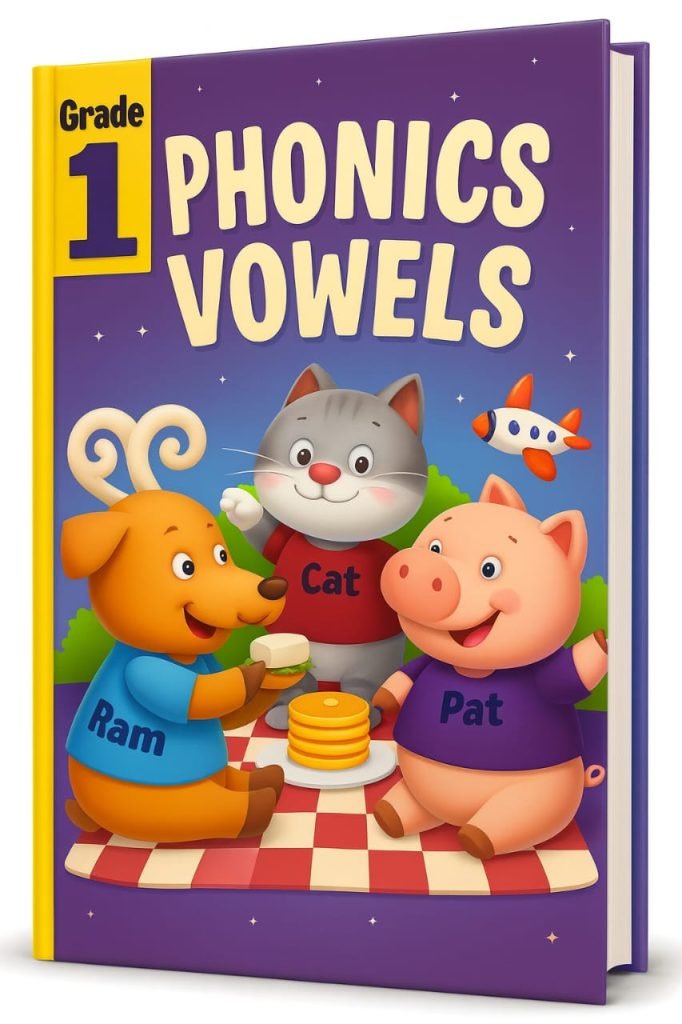
Grade 1 Phonics Vowels
Grade 1 Phonics Vowels Guide for Strong Reading Foundations
Grade 1 Phonics Vowels instruction plays a critical role in shaping a child’s early reading and spelling skills. At this stage, learners move beyond letter recognition and begin to understand how vowel sounds work within words. When vowels are taught clearly and consistently, children develop confidence in reading simple texts and expressing themselves through writing.
Early literacy success depends heavily on phonics. Among all phonics elements, vowels require special attention because their sounds can vary. A well-structured approach ensures that young learners are not confused and can apply what they learn in real reading situations. This guide explores effective strategies, benefits, and best practices for teaching vowel sounds in Grade 1.
Understanding Phonics in Grade 1
Phonics instruction in Grade 1 focuses on connecting sounds with letters. Students already recognize most alphabet letters, so the emphasis shifts toward blending and decoding words. Vowels become central because they appear in nearly every word.
At this level, children learn both short and long vowel sounds. They also begin to notice patterns in words. This understanding helps them read more fluently and with better comprehension.
Because Grade 1 learners are still developing attention spans, lessons must be simple, engaging, and repetitive. Clear routines and visual support are often used to reinforce learning.
Why Vowels Are So Important in Early Reading
Vowels are the heart of words. Without them, reading becomes almost impossible. While consonants provide structure, vowels give words their sound.
Young learners often struggle with vowel sounds because some letters can sound different depending on the word. Therefore, consistent practice is essential. When vowel instruction is strong, children decode unfamiliar words more easily.
This skill also supports spelling. Children who understand vowel sounds are better able to spell words logically rather than guessing.
Short Vowels: The First Step
Short vowel sounds are usually taught first in Grade 1. These sounds are quick and appear in many basic words. Examples include words like “cat,” “bed,” and “sit.”
Teaching short vowels helps children read simple CVC words. These early successes build confidence and motivation. Repetition is important at this stage, as it helps sounds become automatic.
Teachers often use songs, pictures, and word lists to reinforce learning. These methods keep lessons enjoyable and effective.
Introducing Long Vowels Gradually
Once short vowels are mastered, long vowel sounds are introduced. Long vowels often sound like the letter name, such as the “a” in “cake” or the “o” in “home.”
Because long vowels follow specific patterns, learners must be guided carefully. Silent “e,” vowel teams, and open syllables are common concepts taught at this stage.
Clear explanations and plenty of examples help reduce confusion. Over time, students learn to recognize patterns and apply them independently.
Effective Teaching Strategies for Vowel Sounds
Successful phonics instruction uses a mix of strategies. Visual aids such as charts and flashcards support memory. Auditory activities like chanting and reading aloud strengthen listening skills.
Hands-on activities are also effective. Sorting words, filling in missing vowels, and matching pictures to words make learning interactive. These activities keep students engaged while reinforcing key concepts.
Consistent review is essential. Skills should be revisited regularly to ensure retention.
Classroom Activities That Support Learning
Classroom activities should be short and focused. Word-building exercises allow students to experiment with sounds. Reading simple stories helps them apply phonics skills in context.
Group activities encourage discussion and collaboration. When students explain their thinking, understanding deepens. Independent practice is also important, as it builds confidence.
Teachers often rotate activities to maintain interest. This balance supports different learning styles and keeps lessons dynamic.
Supporting Learning at Home
Parents play an important role in phonics development. Simple activities at home can reinforce classroom learning. Reading together daily is one of the most effective strategies.
Parents can ask children to identify vowel sounds in words. Games like word hunts or sound matching make practice enjoyable. Short, regular sessions work better than long study times.
A supportive home environment helps children feel comfortable making mistakes and learning from them.
Helping Struggling Readers
Some children need extra support with vowel sounds. Early intervention is key. Teachers can provide small-group instruction or targeted activities.
Using clear examples and slowing the pace often helps. Encouragement is also important, as confidence affects learning. When children feel supported, progress improves.
Patience and consistency make a significant difference for struggling learners.
Role of Worksheets and Practice Materials
Worksheets provide structured practice. They help reinforce lessons taught in class. Activities like circling vowels, filling in blanks, and matching words support skill development.
However, worksheets should be used thoughtfully. They are most effective when combined with interactive learning. Balance ensures that practice does not become boring or overwhelming.
Well-designed materials guide learners step by step, making learning manageable.
Digital Tools and Phonics Learning
Digital tools are increasingly used in early education. Interactive games and videos can reinforce vowel sounds in a fun way. Instant feedback helps learners correct mistakes quickly.
However, screen time should be balanced with hands-on learning. Printed materials and face-to-face interaction remain essential for young learners.
A blended approach often delivers the best results.
Long-Term Benefits of Strong Vowel Instruction
Strong vowel instruction leads to better reading fluency. Children read more smoothly and with fewer pauses. Comprehension also improves because decoding becomes automatic.
Writing skills benefit as well. When children understand sound patterns, spelling becomes more accurate. This confidence supports creative expression and academic success.
These benefits extend beyond Grade 1 and support lifelong learning.
Creating SEO-Friendly Educational Content
Educational blogs benefit from clear structure and readability. Short paragraphs and simple sentences improve user experience. Proper subheadings help readers navigate content easily.
Transition words improve flow and clarity. Passive voice can be used where appropriate to maintain a smooth tone. These elements also support search engine optimization.
High-quality content builds trust with readers and encourages repeat visits.
Final Thoughts
Grade 1 Phonics Vowels instruction is a cornerstone of early literacy education. When vowel sounds are taught clearly and practiced consistently, children develop strong reading and spelling skills. This foundation supports academic growth and builds confidence.
By using effective strategies, engaging activities, and supportive practice at home and school, educators and parents can guide learners toward success. Early phonics mastery opens the door to fluent reading and a lifelong love of learning.
Comments (0)